Showing posts with label read. Show all posts

Sunday, June 22, 2025

Five Rules for Writers*


And Read:

I would say that I keep a novel going all the time, but there is a moment between books where I'm searching for another.

I read, not because Steven King said, "If you don't have time to read, you don't have time to write,' but because I love reading. And selfishly, I want to have beautiful phrases running through my head as encouragement, and with the hope that they will teach my brain how to write decent phrases and descriptions.

I don't tend to be flowery with words, and poetry boggles my mind, like someone writing music—how in the heck do they do it?  That Dolly Parton keeps perking them out. "I write the songs that make the young girl's cry," Oh, that wasn't her song. Bruce Johnson (1975) wrote it. And in 1977, it won a Grammy for Barry Manilow.

At first, Manilow didn't want to sing the song, for unless you really listen to the words, it sounds like an ego trip for the lyricist.

"I Write the Songs," wrote Joanna Landrum, "isn't just a self-aggrandizing anthem for the gifted songwriter; it's a poetic ode to the universal power of music. At its core, the song celebrates the emotional and transformative impact of music on humanity, suggesting that the essence of music itself is the actual creator of songs."


"I wrote the very first song." The MUSE. GOD, MUSIC?


Finally, in my search for novels, I decided to check out the best and found Barbara Kingsolver's The Poisonwood Bible, a Pulitzer Prize nominee.  Over the years, I had heard of that book but didn't know what it was about — a scholarly book about Christianity or the Bible? No, it was a bestseller about the Congo, with religion, philosophy, and politics intertwined in a way that only a deft hand can achieve.

It deeply impacted me.

 Poisonwood has two meanings; one is a plant in the Congo that, when touched, will give a terrible rash. The other means Blessed.  There are many words, especially in primitive cultures, that have multiple meanings.

The Poisonwood Bible was set in the Eisenhower era when the US was trying to bring Democracy to the Belgian Congo. (Or force, and it looks as though they are trying again.) The Poisonwood Bible is about a Missionary family who move to the Congo to give them Christianity. The father, the Preacher, is so obsessed with bringing Christ and baptizing all the little heathens that he would let his family starve to do it. And starving is what the natives of their village are constantly on the verge of while trying their damnest to avoid.

The viewpoint is from the wife, the mother, and her four daughters. Each of the five has their own voice, which Kingsolver said she wrote their monologues over and over to get their tones and perspectives.

One point I took away was that democracy doesn't work when people rush to a vote without having a viable discussion and coming to some consensus. As an old chief said, "When a vote is 49 to 51, half the population is angry all the time.

Kingsolver lived in the Congo for a time, and she said she researches the devil out of her books. She wants to be honest and have her readers trust her. One point that surprised me is that Kingsolver isn't afraid to use cliches, idioms, and everyday speech in her writing, something writing teachers try to drum out of writers. "Your writing is too good to use convenient slang." Well well.

I also read Kingsolver's The Bean Trees, which I loved. It warmed my heart; it didn't tear it out. I got a kick out of her description of Oklahoma, where my husband and I attended school for two years. In The Bean Trees, I gained some insight into the Cheyenne Nation of Oklahoma.

And people read more non-fiction because it teaches them something. Hum.

Kingsolver won the Pulitzer prize for Damon Copperhead, which I've chosen not to read for I don't want to endure a little boy getting slapped around by a man his mother marries.

I can take just so much angst.

I read a sweet little book this past week titled The Family Journal by Carolyn Brown about a divorced mother who finds her 14 girl smoking marijuana and her little 12-year-old boy sneaking out at night to drink beer. She decided that tough love was in order and moved them to a small town where she had inherited her family's old house and rented it to an agriculture teacher. (Enter a hunk.) It's handy to have an inheritance, but then, that is the stuff of novels. It reminded me of how much fun it is to grow up on a farm, as well as how much work it entails. Children seldom get bored on the farm and often begin to love and care for the animals.

The kids hate her at first, of course.

When I closed the book, I said, "Now that was refreshing."


*Here are Barbara Kingsolver's five rules for writers:

1.     Give yourself permission to write a bad book.

2.     Revise until it isn't a bad book.

3.     Get cozy with your own company.

4.     Study something besides writing.

5.     If you're young and smoke, you should quit.


She goes on to say that you want to live to an old age, for it is then that you do your best writing.

There's hope for me yet.


 P.S. I'm listening, I don't hear you. Love you anyway.

Talk to joshappytrails@gmail.com 

Friday, March 1, 2024

"I Found $10,000 in my Desk Drawer"


That title got my attention. Sorry, it isn’t my story. Another blogger wrote it.

His story is that he pulled out an old piece of writing, resold it, and made $10,000. Maybe it was hype, I don’t know. It doesn’t matter, what matters is that he motivated me.

“I have some old writing,” I said. "I have a book sitting in my drawer."  No, I have several small ebooks sitting on Amazon Kindle. There's The Frog's Song available as a real live book, published by Regal Publishing, or as a Kindle version. There's My Mother's Letters...and mine, Where Tiger's Belch, A Dog , God, & Me, and Take a Leap--all ebooks.  Hey, Ive been busy. No wonder I didn't rake leaves this fall.
They are small books, but it's time they pulled their own weight, instead of me hauling them around on my back.

 $10,000 sitting in a drawer--that's for me.
 
What say you? Are you a writer? I know you are a reader--because you're here. Good for you. Steven King says "If you don't have time to read, you don't have time to write." 
I don't have time to do the dishes.

 Shout outs on https://joycedavis.substack.com

Thank you for being here.

I'm not ignoring you guys here, I am also posting on an old site, now revised, called Where Tigers Belch and Monkey's Howl.blogspot.com. 

I wanted the title to be simply Where Tiger's Belch, but someone else got the dot com. It has a coming-soon site, so guess I'm stuck. 

I am excited to be back with The Tiger. The time I was writing it felt lighter, and I want that again.

I heard my tiger belch a long time ago, figuratively, of course. He belches exactly on the spot where you find your calling. (Until you find that spot you are wandering in the jungle as my lady does in Where The Tiger Belches.) 


Have you found that spot, where your tiger belched?

Then as Ray Bradbury said, "You jump and build your winds on the way down."

That's a scary thought. 

However, you write, you practice, you persevere until you are strong enough to declare yourself a writer, and build the opportunity to sell your work. Of course this applies to almost any endeavor.

Please remember to subscribe to my Substack site, for there I will write a newsletter and explain whats up for me. 

https://joycedavis.substack.com

If you subscribe, when I post new information it will come in your email that way you won't have to remember to check it. No charge. It's free.

Click  on the Pink Dogwood Flower and it will take you directly  to the latest newsletter:


P.S. I was born in the Chinese Year of the Tiger. I didn't think of it until moments ago when I was writing for Where The Tiger Belches and Monkeys Howl. No wonder I went back to the Tiger.


Click on the image and it will take you to the Tiger novella.


Tuesday, March 1, 2022

For Those Who Read, or Write, or Want To - Celebrate!

Although Sylvia Plath won a Pulitzer Prize for her book “The Collected Poems,” she is perhaps best known for “The Bell Jar.” 

Alfred A. Knopf, Plath’s first American publisher, passed on “The Bell Jar” twice. But through the author’s strong belief in her talent and her dedication, she acquired a measured response to such brushoffs. 

Plath understood that professional writing meant courting criticism — first from editors, then reviewers, and finally readers. Rather than fretting over responses she couldn’t control, Plath celebrated each time she was vulnerable enough to send her work out into the world.


From Steven King:

 "If you wrote something for which someone sent you a check, if you cashed the check and it didn't bounce, and if you then paid the light bill with the money, I consider you talented."


I've neglected you guys over the past couple of week. I'm sorry about that. How can I make it up to you? And yet I turn to you when I am in a quandary about writing. I figure you guys understand, for sisnce you are here, I figure many of you are either writers or want-a-bees. 


 I have put out two children's books within the past week, and I'm been struggling to get them properly formatted for Amazon to publish. 


This morning, in preparation for the paperback edition of The Incredible Yellow School Bus, I wrote a dedication to my daughter Nina:


 For my beautiful daughter Nina.

 I wrote this story when my daughter was in the first grade and read it to her class. (It kept their attention.) Ever since, Nina has often admonished me by saying, “Mom, publish the school bus story.”

 But I didn’t, until now.

 It was my first fiction story of any length, and I thought I needed to learn more before anyone read it. Often, I would dink with it and make it worse.

 Now, these many years later, Nina says to me, “Mom, sometimes a person’s first work is the best. And then we think we ought to make it a certain way and lose the purity of it.” See, she grew into a wise adult.

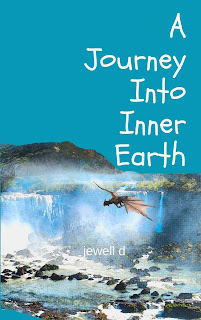
 And then I wrote Incredible's sequel, A Journey Into Inner Earth, and that was a fun write and read. 

 Thanks Nina. This is for you.

Mom

A click on the cover picture will take you to the book on Amazon. 


 I thought perhaps you could relate, how you first write something in the throes of enthusiasm, and then doubt yourself. Or else have let it sit so long you're afraid it has dried up. Also, some say,  that gremlins come in during the night and dink with your prose. They probably dink with your poetry too, but I'm not a poet, so I can't say. I admire you who write it though.


And from Amazon:

While Amazon’s algorithms are somewhat of a mystery, it’s a known truth that when your book accrues a certain number of reviews, or a lot of reviews in a short amount of (unspecified) time, Amazon kicks into gear multiple promotions for your book. Free promotion that would probably cost a fortune if you had to foot the bill.

 Every time your book is reviewed, the algorithms are updated, and your book’s internal ranking increases.

 They say the magic number is 50 reviews. Wow.


A special Thanks.

  So, my dear ones, for anyone who will kindly write a review,  I will thank you profoundly. For the first FIVE people--kids or adults--to write a review for either or both books, I will send you a  tee-shirt as a special THANK YOU.

 (I will need your NAME, ADDRESS and size. Adult or child, S, M, L, XL, 2XL.)

 I’m providing links to review the books, for it took me a while to learn how to do it, and that will, hopefully save you time.*


To write a review for The Incredible Yellow School Bus, please click on the below picture: This will take you to the Amazon review page. 


For A Journey Into Inner Earth, click below:


*To go the Amazon route, go to the item you want, SCROLL WAY DOWN on the left side of the page, past other books until you come to this:
 

Thanks for reading. You know I love you,

Jo


Thursday, November 19, 2020

I Love This Guy

 If you happened to see this blog before today, it had  all CAPS from Fahrenheit 451 quote on down. I don't know what happened. Here we go again. 


This is how I remember him.

Ray Bradbury.


Remember him?

He says the reason we remember so many of his stories is because he is strong in metaphor. 

 “With the brass nozzle in his fists, with this great python spitting its venomous kerosene upon the world, the blood pounded in his head, and his hands were the hands of some amazing conductor playing all the symphonies of blazing and burning to bring down the tatters and charcoal ruins of history.”-- Fahrenheit 451

Wow, you’re full of them, aren’t you, Bradbury?

 I’m terrible at them. It must be something in my brain that stops me from saying something is something else. But I can learn.

 “If Life is a Bowl of Cherries—What am I doing in the Pits?” Bradbury is right. I remember that title (1985) when I don’t remember Erma Bombeck’s book, except that it was funny.

 I remember Forrest Gump’s metaphor, “Life is a box of chocolates—you never know what you’ll get.”  

 But back to Bradbury. I saw today that this year, 2020, Bradbury would have celebrated his 100th birthday. Hope you’re having a good time Ray.

Whether you are a fan of his books or not, he was one of the most enthusiastic writers. He loved writing. He relished in it. He woke up in the mornings, ready to run to his typewriter. Yep, typewriter. I think he and the computer had an adversarial relationship. 

 “If you don’t love it, don’t do it,” he said.

  “Writing is not a serious business. It’s a joy and a celebration. You should be having fun at it. Ignore the authors who say, oh my god, what work, oh Jesus Christ, you know. No, to hell with that. It is not work. If it’s work, stop it, and do something else.”

Once upon a time, I attended a writer’s seminar in San Diego, where Bradbury and about 12 students at San Diego State University sat outside on the grass while he talked of writing. (Like Socrates teaching his students.) And although I don’t’ remember what he said, I walked on air when I got out of there. (Is that a metaphor?)

 Another time I attended an Optics Conference with my husband where Bradbury was the key speaker. Wow, he sat those scientists on their eats, and instead of shaking my hand, he hugged me. I figured I was blessed.

 -from a 1974 interview with James Day:

 Don’t write towards a moral:

[Trying to write a cautionary story] is fatal. You must never do that. A lot of lousy novels come from people who want to do good. The do-gooder novel. The ecological novel. And if you tell me you’re doing a novel or a film about how a woodsman spares a tree, I’m not going to go see it for a minute.

 Read these three things every night:

 What you’ve got to do from this night forward is stuff your head with more different things from various fields . . . I’ll give you a program to follow every night, very simple program. For the next thousand nights, before you go to bed every night, read one short story. That’ll take you ten minutes, 15 minutes. Okay, then read one poem a night from the vast history of poetry. Stay away from most modern poems. It’s crap. It’s not poetry! Now if you want to kid yourself and write lines that look like poems, go ahead and do it, but you’ll go nowhere. Read the great poets, go back and read Shakespeare, read Alexander Pope, read Robert Frost. But one poem a night, one short story a night, one essay a night, for the next 1,000 nights. From various fields: archaeology, zoology, biology, all the great philosophers of time, comparing them. Read the essays of Aldous Huxley, read Lauren Eisley, great anthropologist. . . I want you to read essays in every field. On politics, analyzing literature, pick your own. But that means that every night then before you go to bed, you’re stuffing your head with one poem, one short story, one essay—at the end of a thousand nights, Jesus God, you’ll be full of stuff, won’t you?

 -from “Telling the Truth,” the keynote address of The Sixth Annual Writer’s Symposium by the Sea, sponsored by Point Loma Nazarene University, 2001.

 That’s quite an assignment isn’t it?

 Advice from a Master.

 Carry on,

 I’ll keep writing.

  How about you?

Joyce